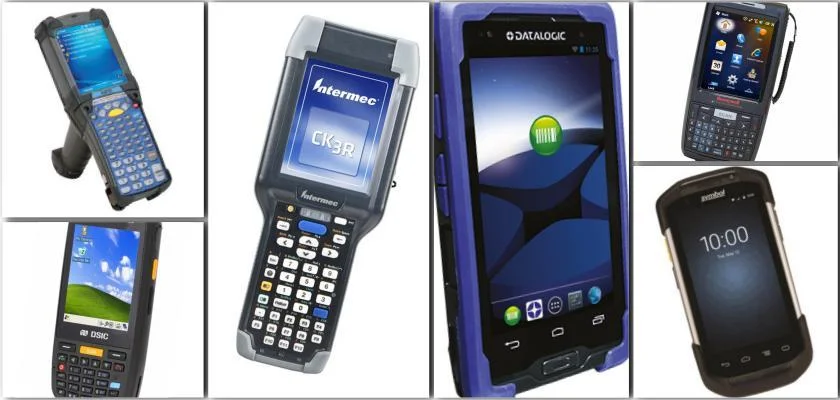
What You Need to Know About Handheld Terminals
Handheld terminals are the general name for handheld computers, and they are devices designed to collect, interpret, and process data entered manually or via barcode scanners and RFID readers, primarily within industrial barcode printer systems. The data stored in these systems is typically transferred to other systems. In this way, general data from multiple terminals is collected at a central hub and transferred to main systems based on the operations performed. In their early days, they were produced with DOS operating systems. However, today, various Windows versions are also available to meet different needs. Handheld terminals read barcodes in different industrial barcode printer systems and transmit the codes on them to electronic devices such as computers. These devices are small and functional electronic tools designed for handheld use. They perform reading operations using laser scanners for barcodes and antenna systems that can receive radio waves for RFID systems. The pricing of all these devices is directly proportional to their range.
What Are PDAs and Industrial PDAs?
PDAs and industrial barcode printers, and industrial PDAs generally show similarities in terms of processing capacity. However, the fundamental difference that distinguishes them is that PDAs are designed for personal applications. Industrial PDAs, on the other hand, are produced to be more durable and specially equipped for use in harsh field conditions. Integrated barcode scanners are an example of this. Although they are similar in processing capacity, differences in materials used, quality, and special equipment cause price differences.